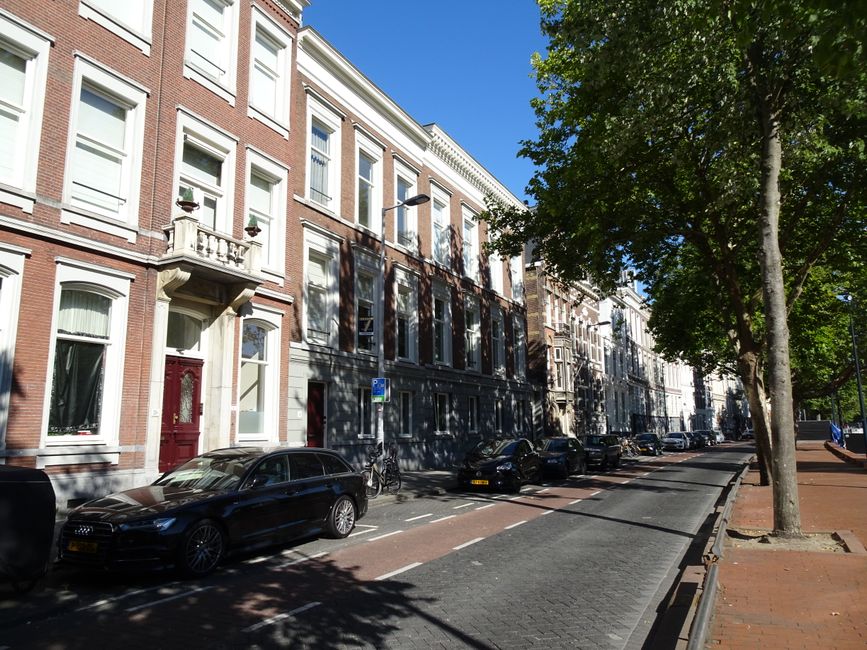
Permits and parking for Holland Park removals: a practical guide to getting access right
If you are moving in Holland Park, the parking side of the job can be the difference between a smooth morning and a slightly chaotic one. Narrow streets, busy residents' bays, loading restrictions, odd access angles, and the occasional van circling block after block - it all adds up. Permits and parking for Holland Park removals matter because the best-planned move can still unravel if the vehicle cannot stop close enough to the property. In this guide, we'll walk through how local parking arrangements usually work, what to check before moving day, and how to avoid the common headaches that catch people out.
Truth be told, many removals look simple on paper and then become a puzzle on the pavement. This article gives you the practical side of the picture: what permissions may be needed, how parking is usually managed for a removal van or lorry, what to ask in advance, and how to keep the day calm enough that you can actually find the kettle when you need it.
- Why it matters
- How parking and permits work
- Key benefits and practical advantages
- Who needs this and when it makes sense
- Step-by-step guidance
- Expert tips
- Common mistakes to avoid
- Tools, resources and recommendations
- Law, compliance, standards and best practice
- Options and comparison table
- Real-world example
- Practical checklist
- Frequently asked questions
Why Permits and parking for Holland Park removals Matters
Parking is not just a logistics detail. In an area like Holland Park, it can shape the whole pace of the move. If the removal vehicle is too far from the entrance, teams spend extra time carrying boxes, furniture, and awkward items back and forth. That means more labour, more stress, and sometimes more risk of accidental knocks in hallways or on stairwells.
There is also the local reality to think about. Residential streets in London often have controlled parking, tight kerb space, permit zones, or restrictions that limit where a van can wait. A removal team might be excellent at loading and unloading, but if the bay is not arranged properly, even the best crew will be slowed down. And nobody wants a sofa halfway through the doorway while someone is trying to work out whether the van can stay where it is.
For many households, this becomes especially important if you are moving from a flat, a townhouse with shared access, or a property on a road where parking is already in short supply. If you are planning a move near a busy stretch or close to transport links, a parking mistake can cost you time right from the start. That is why a bit of planning goes a long way.
Practical takeaway: the closer the vehicle can park to the property, the faster and safer the move usually becomes. In Holland Park, that often means planning parking before the van arrives, not after.
How Permits and parking for Holland Park removals Works
The exact process depends on the street, the type of property, and the size of the removal vehicle. In plain English, the goal is to create legal, safe, and usable space for loading and unloading. That can involve a parking permit, a temporary suspension of a bay, a loading arrangement, or simply choosing a time when restrictions are less likely to cause trouble.
For a home move, the usual questions are straightforward:
- Can the removal van stop close enough to the entrance?
- Is the space a residents' bay, pay-and-display bay, loading bay, or single yellow line area?
- Will the vehicle fit without blocking traffic or crossing a dropped kerb incorrectly?
- Does the move need a timed loading window?
- Is there room for access equipment, trolleys, or a second vehicle if needed?
If you are using a professional mover, they will often help assess the parking setup in advance. That is especially useful where a property has limited frontage, a narrow street, or a route that is awkward for larger vans. In our experience, the best moves are the ones where the parking question is settled early, because everything else flows better once the truck has a proper spot.
Sometimes the simplest answer is a smaller vehicle. A man and van service can make sense where access is tight and there is little room for a larger lorry. In other cases, a larger vehicle is still the right choice, but it needs a parking plan that suits the street and the timing of the move.
You may also need to think about whether parking arrangements are needed for both collection and delivery. That second stop is easy to forget. A move can go perfectly at the pickup end and then get messy at the destination if no one has considered where the vehicle will pause there. Annoying, yes. Avoidable, also yes.
Key Benefits and Practical Advantages
Sorting parking and permits properly brings more than convenience. It can make the move safer, cheaper in practice, and much less tiring. Here are the main benefits people usually notice.
- Less carrying distance: shorter walks mean faster loading and less strain on the crew.
- Lower risk of delay: there is less waiting around for a space to free up or for traffic to move.
- Better protection for belongings: fewer trips across kerbs, steps, and doorways reduces the chance of damage.
- Less disruption to neighbours: a planned loading space helps keep pavements and traffic flow clearer.
- More predictable costs: time lost to parking problems can become labour time, which nobody wants.
There is also a practical human benefit that gets overlooked: the move feels more controlled. When the van is parked where it should be, the job stops feeling like a scramble. Boxes go out in a sensible rhythm, the team can work properly, and you have one less thing to worry about. That alone is worth a lot on moving day.
If your move involves a full house or a large number of furniture items, proper parking becomes even more valuable. Heavy pieces such as wardrobes, beds, and white goods are not fun to manoeuvre over long distances. If you want support with the broader move as well, take a look at house removals for a fuller service that can be planned around access and vehicle position.
Who This Is For and When It Makes Sense
Not every move needs a complicated parking plan, but many Holland Park moves do benefit from one. This is especially true if one or more of the following applies:
- You live in a flat, mansion block, or property with limited curb access.
- Your road has residents' parking bays, controlled hours, or loading restrictions.
- The property sits on a narrow street where vehicles pass close by.
- You are moving bulky furniture, fragile items, or a lot of boxed contents.
- You are moving on a weekday, when traffic and parking demand are higher.
- You need a larger removal vehicle rather than a small van.
- You are managing a business relocation or office move with a strict schedule.
Commercial moves often need even tighter planning. A small business cannot always afford to lose half a morning because the van has nowhere to wait. If that sounds familiar, the planning principles are the same, but the margin for error is smaller. For a business relocation, see the support available through office removals or the broader office relocation services page if your move includes equipment, files, and timing coordination.
Students, renters, landlords, and homeowners can all benefit from the same basic approach. The difference is usually scale. A studio flat move may need a van and a nearby bay. A family home move may need more space, more time, and a stricter plan. Different shape, same principle.
Step-by-Step Guidance
If you want to keep the move sensible, work through the parking side in a clear order. Nothing fancy. Just the right questions in the right sequence.
- Check the street conditions. Look at signs, bays, yellow lines, nearby junctions, and any obvious restrictions around your property.
- Measure the access point. Note whether the van can stop close to the entrance, and whether there is enough room for doors to open safely.
- Confirm the vehicle size. The best parking setup depends on whether you are using a small van, a larger moving truck, or something in between.
- Ask about permits or suspensions early. If special parking arrangements are required, do not leave this until the day before. That is where things get messy.
- Match the schedule to the street. Where possible, choose a time that avoids peak traffic and the most congested parking periods.
- Plan for neighbours and building rules. Flats and shared buildings may have their own access expectations, concierge rules, or estate restrictions.
- Keep contact details handy. If the driver needs to coordinate arrival or parking position, someone should be reachable quickly.
- Build in a small buffer. A buffer of even 15 to 30 minutes can make a real difference if traffic or parking conditions change.
One simple habit helps more than people expect: walk the route from the van to the front door before the move starts. It sounds almost too simple, but it highlights low doorframes, tight corners, uneven paving, and other small issues that become big issues when you are carrying a mattress. You notice things differently when you are looking with moving-day eyes.
If you are not sure how to handle packing alongside the access planning, coordinated packing and unpacking services can help reduce the time the vehicle needs to stay put. Less time on street, less stress all round.
Expert Tips for Better Results
A few small decisions can make a surprising difference. The move does not need to be perfect. It just needs to be less awkward than it could have been.
- Photograph the parking signs. It helps to have a quick record of restrictions, especially if there is any doubt about times or bay markings.
- Choose the right vehicle size. A smaller vehicle may be more efficient if it can park legally and closer to the property.
- Keep boxes grouped by priority. If the van has a limited loading window, load essential items first so the most important things are easy to unload.
- Avoid peak school-run or commuter times where possible. You will often find the street feels calmer outside those windows.
- Have one person managing the curbside point. Even a quiet move benefits from one person checking the van position and keeping an eye on timing.
Another useful tip: if you are moving from a property with awkward access, tell the removal team before moving day, not on the morning itself. Sounds obvious, but it happens. A lot. The more the team knows about the route, the better they can prepare ramps, trolleys, protective coverings, and the right vehicle.
If you are comparing services, remember that the cheapest quote is not always the best value if parking problems will add time later. It can be smarter to choose a team that understands local access properly. A provider with experience of removal services in the area is often better placed to flag access issues before they become expensive.
And yes, sometimes the best advice is simply to be a bit boring in advance. Check, confirm, double-check. Not glamorous, but it works.
Common Mistakes to Avoid
The parking side of a move often fails for reasons that are entirely avoidable. Here are the ones that crop up most often.
- Assuming a space will be available. In London, assuming is rarely a strategy.
- Leaving permit arrangements too late. If special access is needed, last-minute action can leave you stuck.
- Booking a vehicle that is too large for the street. Bigger is not always better if it cannot park safely and legally.
- Forgetting the delivery address. Access at the new property matters just as much as access at the old one.
- Not checking the building rules. Some blocks have specific loading or lift-booking requirements.
- Ignoring time limits. A short loading stay is fine only if the move is genuinely short. Otherwise it becomes rushed.
Another common issue is overconfidence with flat moves. People look at the front entrance and think, "That seems fine." Then the first box meets a tight stairwell, and suddenly the van parking plan feels much more important. If the move involves a flat, it is worth reviewing flat removals options with access in mind from the start.
There is also the problem of under-communicating. If the mover does not know about a controlled parking zone, a one-way street, or a small courtyard entrance, they cannot plan around it properly. That is not a paperwork issue; it is a moving-day issue. Small gap, big consequence.
Tools, Resources and Recommendations
You do not need a complicated toolkit to plan parking well, but a few simple items and documents help a lot.
| Tool or resource | Why it helps | Best used for |
|---|---|---|
| Phone camera | Records signs, bay markings, and access points | Checking restrictions and sharing details with movers |
| Simple floor plan or notes | Helps match vehicle size to entrance and carrying route | Planning larger furniture moves |
| Contact list | Keeps the driver, building manager, and key people reachable | Time-sensitive access and coordination |
| Moving labels | Reduces unloading delays once the vehicle is parked | Fast, organised unloading |
| Protective packing materials | Reduces handling risk on short but busy carrying routes | Fragile or heavy items |
If you are still deciding what sort of move support you need, it can help to compare services side by side. A man with a van arrangement may suit smaller jobs or tighter streets, while a larger moving truck is better for bigger loads if the street can accommodate it. The right choice depends on volume, timing, and access. Not just price.
For people who want a clearer sense of pricing structure and what affects the final quote, the page on pricing and quotes is a useful place to start. It is always better to understand what is included before moving day rather than hoping it will all work itself out. Spoiler: it rarely does.
Law, Compliance, Standards and Best Practice
Parking and permits for removals should always be handled with care because this is an area where local restrictions and road rules matter. The exact requirements can vary by street and by council-controlled arrangements, so the safest approach is to verify the relevant local parking conditions before the move. If a property sits within a regulated parking area, do not assume a removal vehicle can simply stop wherever is most convenient.
Best practice usually includes the following:
- checking signage and bay markings before booking the vehicle
- planning for any loading or unloading time limits
- ensuring the vehicle does not block access or create an unsafe obstruction
- coordinating with building management where the property has shared access
- using an appropriately sized vehicle for the street and the load
From an operational point of view, good removals companies should also think about safety, insurance, and damage prevention. If you want to understand the standards behind that side of the service, see the company information on insurance and safety as well as the health and safety policy. Those pages help show how a mover approaches risk, which matters when tight parking and heavy items meet on the same morning.
Best practice is not about being overcautious. It is about avoiding preventable friction. A move that respects local parking rules is usually a move that gets done faster, cleaner, and with fewer awkward conversations on the pavement. Everyone breathes easier.
Options, Methods, or Comparison Table
There is more than one way to manage access for a Holland Park move. The right approach depends on how much you are moving, how tight the street is, and how long the van will need to stay nearby.
| Approach | Best for | Pros | Trade-offs |
|---|---|---|---|
| Small van with nearby parking | Smaller flats, lighter loads, tight streets | Easy to position, often more flexible | May need more trips if the load is large |
| Large removal vehicle with planned parking | Full-house moves, bulky items, long-distance moves | Fewer trips, efficient loading | Requires more space and better planning |
| Timed loading arrangement or permit-based access | Controlled roads or busy bays | Clearer legal access, less chance of disruption | Needs advance preparation and coordination |
| Split load with shuttle vehicle | Very restricted access or large furniture | Can solve access issues where a big vehicle cannot stop close by | May take longer and cost more in labour time |
In practice, the best option is often the one that keeps the move simple. A slightly smaller vehicle, positioned well, can be better than a huge truck that has nowhere sensible to stand. Fancy equipment is great. Sensible parking is better.
Case Study or Real-World Example
Imagine a family moving from a second-floor flat near Holland Park. The property has a narrow street, limited curb space, and a steady flow of cars in the morning. At first glance, the move seems straightforward because the flat itself is not huge. But there is a catch: the building entrance is set back slightly, the nearest legal parking is a short walk away, and one of the larger items is a heavy chest of drawers that will not love repeated lifting.
Rather than arriving and hoping for the best, the move is planned around a smaller vehicle that can fit a legal parking position closer to the entrance. The team is told in advance about the stairs, the narrow landing, and the bulky items. Boxes are grouped so the most urgent ones come off first. There is a contact person available by phone in case the driver needs a quick decision about the bay position.
The result? The move is not glamorous, but it is smooth. No one is left waiting in the road. The loading run is short. The furniture reaches the new place without extra handling. The family still has that slightly frazzled moving-day look, of course - everyone does - but the day feels manageable rather than frantic.
That is usually what good parking planning gives you: not perfection, just calm. And calm is a lovely thing on moving day.
Practical Checklist
Use this checklist before moving day. If you can tick most of these off, you are in decent shape.
- Confirm the property address and any access notes.
- Check whether the street has parking restrictions, loading limits, or bay controls.
- Decide whether you need a small van, larger truck, or split-load approach.
- Tell the mover about stairs, lifts, courtyards, or narrow entrances.
- Plan where the vehicle will stop at both pickup and delivery.
- Make sure contact numbers are available on the day.
- Prepare labels so unloading is quick and organised.
- Keep key documents and essentials separate from the main load.
- Allow time for unexpected delays, even if they never happen.
- Recheck the plan the day before the move, not just weeks earlier.
If storage is part of your plan because access timing is awkward or the properties do not line up perfectly, you may also want to consider storage. That can take pressure off the move and help if parking or access windows are tight at either end.
Conclusion
Permits and parking for Holland Park removals are not the glamorous part of moving, but they are one of the most important. Get the access right and the rest of the day usually feels much easier. Get it wrong and even a small move can turn into a long, frustrating shuffle between kerb, hallway, and front door.
The good news is that this is very manageable with a little planning. Check the street, understand the restrictions, choose the right vehicle, and give your movers the details they need. That combination tends to save time, protect your belongings, and keep everyone in a better mood. Which, let's be honest, is half the battle.
Get a free quote today and see how much you can save.
Moving day is rarely anyone's favourite day, but with the parking side sorted, it can still feel orderly, respectful, and surprisingly human.
Frequently Asked Questions
Do I need a parking permit for removals in Holland Park?
It depends on the street, the parking controls in place, and how long the removal vehicle needs to stay. Some moves may need a permit, a bay arrangement, or a timed loading plan, while others can work with careful street positioning. Always check the local restrictions before the move.
How far in advance should I arrange parking for a removal van?
As early as possible. If you need special parking access, leave enough time to check the rules and make any arrangements well before moving day. Last-minute planning is where stress tends to creep in.
Can a removal company help with parking and permits?
Yes, many can help assess what is needed and plan the vehicle size and timing around local access. It is still wise to share your property details early so the team can prepare properly.
What happens if the van cannot park near my property?
The move may take longer because items have to be carried further. That can increase labour time and make the job more tiring. In some cases, a smaller vehicle or a different loading plan is the better answer.
Is a smaller van better for Holland Park streets?
Sometimes, yes. A smaller van can be easier to position in tight residential streets, especially where parking is limited. But the best vehicle depends on the size of the load and whether the whole job would become slower with too many trips.
Do flats need more parking planning than houses?
Often they do. Flats can involve stairwells, shared entrances, limited loading space, and building rules that affect access. That does not mean the move is difficult, just that the parking side deserves a closer look.
Can I stop on a double yellow line for removals?
You should not assume that stopping on any restricted line is allowed. Parking and loading rules vary, and you need to check the local restrictions before relying on any loading stop. The safest approach is to confirm the permitted arrangement in advance.
What if my building has a concierge or estate manager?
Let them know early. Some buildings have access procedures, booking rules, or preferred loading times. A quick conversation can prevent delays on the day.
How do I reduce the time the vehicle needs to stay parked?
Label boxes clearly, keep essential items easy to reach, and organise the load so the crew can work in a steady sequence. Good packing and a clear plan make a real difference. Small thing, big impact.
Should I plan parking at both the old and new address?
Yes. It is easy to focus on the pickup address and forget the delivery side, but both matter. A smooth move needs a workable vehicle stop at each end.
What is the best time of day for removals in a busy area?
The best time is usually the one that avoids the busiest parking and traffic periods, but this depends on the exact street and local conditions. Early or mid-morning often works well, though not always. The key is to match timing to access, not to guess.
Where can I get a clearer idea of move costs?
You can start with the pricing and quotes information, which helps explain how move size, access, and timing can influence the final cost. It is a sensible first step if you are comparing options and want fewer surprises later.